
Does Home Insurance Cover a Leaking Roof or Storm Damage?
Storm damage or wear and tear? A Carlisle roofer explains how insurers usually judge roof claims, what evidence to gather in the first few days, and where a roofer's report fits in.
EA Roofing Services · Carlisle & Cumbria · 22 September 2026
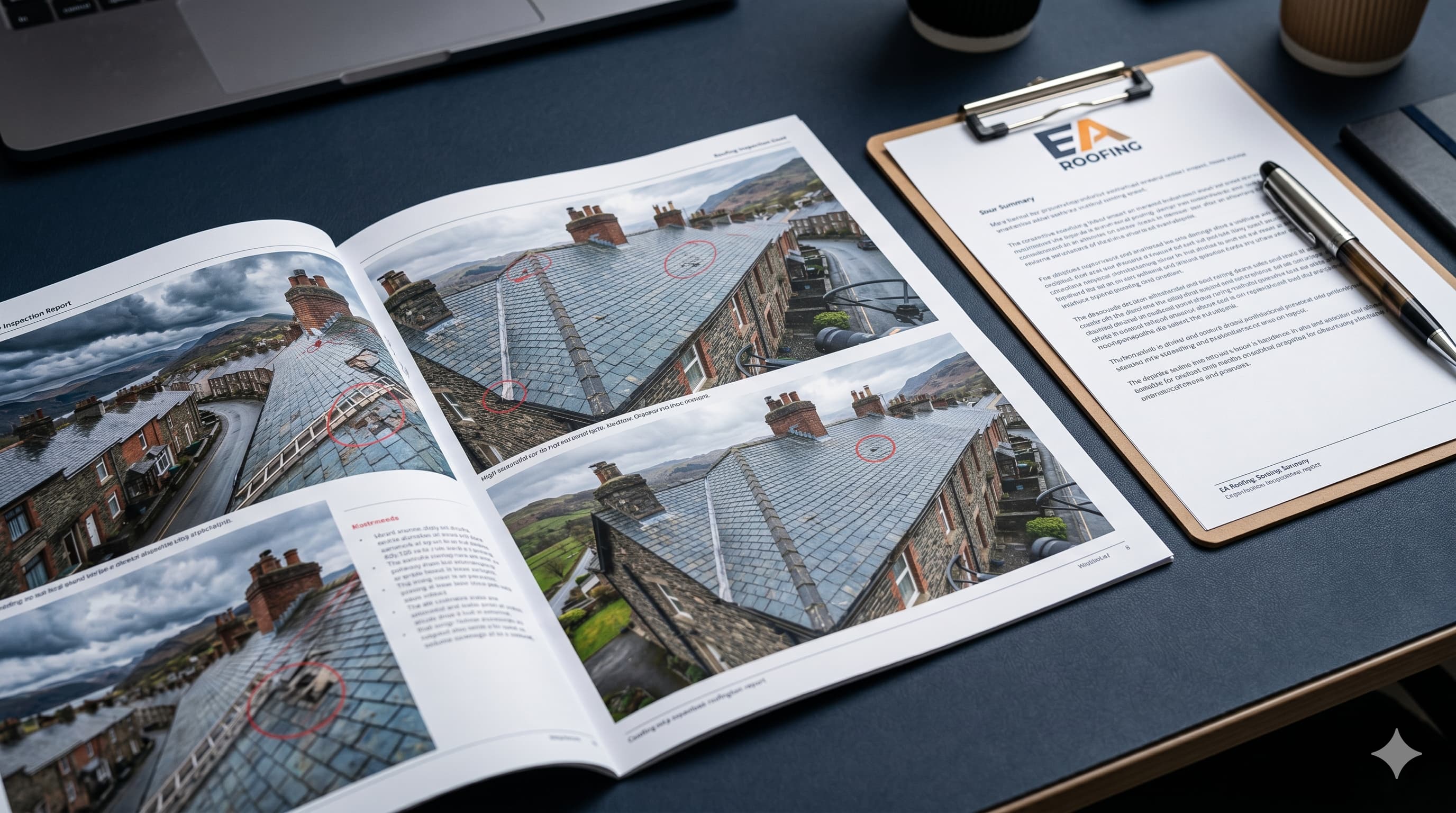
When water starts coming through a ceiling after a storm, one of the first questions homeowners ask us is whether their insurance will pay. The honest answer is: it depends on why the roof leaked. Insurers draw a hard line between sudden storm damage and a roof that has simply worn out.
As roofers, we see both sides of that line every week. This guide explains how roof claims are usually judged, what evidence helps, and where a roofer's report fits in.
Please note: This is general information from a roofing contractor, not insurance advice. Every policy is different. Always check your own policy wording and speak to your insurer or broker about your cover.
Can I Claim for a Leaking Roof on Insurance?
Most UK home insurance is split into buildings cover and contents cover. Your roof falls under buildings insurance. Buildings policies are designed to pay for sudden and unforeseen damage caused by an insured event — storm, fire, a falling tree and so on.
So the question an insurer asks isn't "is the roof leaking?" It's "what caused the leak?"
- Likely to be covered: slates or tiles blown off a sound roof in high winds, a tree or branch falling onto the roof, a chimney pot brought down in a storm
- Unlikely to be covered: slipped slates caused by corroded nails, crumbling ridge mortar, a flat roof that has reached the end of its life, leaks caused by blocked gutters or poor previous repairs
Water damage inside the house — stained ceilings, ruined carpets — may be treated separately from the roof itself. Some policies cover resulting internal damage even when the roof repair isn't covered; many don't. Check your policy.
Storm Damage vs Wear and Tear: How Insurers Decide
This is where most roof claims are won or lost. When a claim is disputed, the Financial Ombudsman Service typically looks at three questions:
- Were there storm conditions? Insurers define a storm in their own policy wording, often by wind speed or rainfall. They'll usually check weather records for your area on the date of the damage.
- Is the damage consistent with a storm? Missing slates, lifted ridge tiles and a damaged chimney stack are typical storm damage. Gradual problems like moss build-up or damp patches that have developed over months are not.
- Was the storm the main cause? If a roof was already in poor condition and the storm simply exposed it, an insurer may say the real cause was wear and tear.
An insurer's assessor will look for signs that a roof was already failing: rusted or "nail sick" fixings, perished mortar, old patch repairs, heavy moss growth and long-standing staining in the loft. That's why keeping your roof maintained matters — it protects your claim as well as your home.
Will Insurance Pay Out for Storm Damage?
In many cases, yes. If a named storm or severe weather has passed through Cumbria and your roof was in reasonable condition beforehand, storm damage is one of the most common roof claims insurers pay. Problems usually arise when the damage is minor, the weather didn't meet the policy's storm definition, or the roof shows signs of long-term neglect.
Your excess also matters. If the repair is small, it may cost less than your excess, and claiming could affect your future premiums. It's worth getting a repair quote before deciding whether to claim.
Flat Roofs and Insurance
Flat roofs deserve a special mention. Some insurers ask what percentage of your home's roof is flat, and a large flat roof area can affect whether a policy is available or what it costs. If your answer on the application was wrong, it could cause problems when you claim.
Flat roofs also have shorter lifespans than pitched roofs, so insurers are more likely to argue that a leak on an older flat roof is down to age. If you have a flat roof extension or garage, keep records of when it was installed and any work done since. Our guide to flat roof materials covers typical lifespans.
What to Do If Your Roof Is Damaged
If you think you have storm damage, the steps you take in the first few days can make a real difference to your claim:
- Stay safe and stay off the roof. Never climb onto a storm-damaged roof. Everything useful can be checked from the ground or the loft — our guide to checking your roof after bad weather explains how.
- Photograph everything. Take dated photos of damage outside, debris on the ground, the loft and any internal water damage. Note the date and time the damage happened.
- Keep any debris. Hold on to fallen slates, tiles or ridge pieces if it's safe to do so. They can show whether a fixing failed suddenly or had been deteriorating.
- Contact your insurer promptly. Most policies expect you to report damage as soon as reasonably possible. Ask what they need from you and whether they'll send their own assessor.
- Prevent further damage. Policies usually expect you to take reasonable steps to stop things getting worse. A temporary repair or tarpaulin is normally fine — keep the invoice, and check with your insurer before any permanent repair is carried out.
- Get a roofer's report. A written report from a roofer describing the damage and its likely cause gives your insurer clear evidence to work from.
If water is already coming in, our roof leak guide covers what to do right now.
How a Roofer's Report Helps Your Claim
Insurers deal in evidence. A report from a roofer who has actually inspected the roof can set out what's damaged, what caused it, what the roof's general condition is and what the repair involves. That's far more useful to an assessor than a homeowner's description.
EA Roofing Services can inspect your roof, make it safe, photograph the damage and provide a written report to support your claim. Where access is difficult, a drone roof survey gives clear, dated images of the whole roof without the cost and delay of scaffolding.
A good roofer will also be honest when damage looks like wear and tear rather than storm damage. That saves you the time and stress of a claim that's likely to be declined.
Need evidence for a claim?
A drone survey from £149 documents the whole roof with dated images — no scaffolding, no waiting.
Book a Drone Roof Survey →Does Your Roofer Have to Give You Paperwork or Guarantees?
Whether it's an insurance job or not, you should expect:
- A written quote setting out the work, before anything starts
- An itemised invoice when the work is finished — your insurer will want this
- Clear guarantee terms in writing, covering workmanship and, where relevant, the manufacturer's product guarantee
- For larger jobs such as a full re-roof, an explanation of how Building Regulations compliance will be handled
If a roofer won't put things in writing, that's a warning sign.
Check Your Roofer Is Insured
Before anyone works on your roof, ask whether they hold public liability insurance and ask to see the certificate. Roofing is work at height, and you want any accident or damage to your property to be covered by the contractor's insurance.
EA Roofing Services hold public liability insurance and we're happy to show our certificate before any job starts.
Storm-Damaged Roof in Carlisle or Cumbria?
We cover Carlisle, Penrith, Wigton, Brampton, Longtown and the rest of Cumbria, plus South West Scotland, with emergency cover 7 days a week. Call us on 07341569754 or request an inspection.
Frequently Asked Questions
Can I claim for a leaking roof on insurance?
It depends on the cause. Buildings insurance usually covers sudden damage from an insured event such as a storm. It usually doesn't cover leaks caused by age, wear and tear or lack of maintenance. Check your policy wording or ask your insurer.
Is a leaking roof covered by insurance in the UK?
Not automatically. Most UK buildings policies cover storm damage to a roof, but exclude gradual deterioration. If a storm damaged a sound roof, you may be covered; if the roof failed because it was worn out, you're unlikely to be.
Does home insurance cover wear and tear on a roof?
Almost never. Wear and tear, gradual deterioration and poor maintenance are standard exclusions in UK home insurance policies. Insurance is designed for sudden, unforeseen events.
Will insurance pay out for storm damage?
Usually, if the weather meets your insurer's definition of a storm and the storm was the main cause of the damage. Each insurer defines a storm differently, so check your policy wording.
What does insurance cover on a roof?
Buildings insurance typically covers damage to the roof structure and covering caused by insured events such as storms, fallen trees and fire. Contents insurance may cover belongings damaged by water coming in. Cover varies between policies.
Does my roofer have to give me paperwork or guarantees?
You should expect a written quote, an invoice and clear guarantee terms. For larger jobs such as a full re-roof, ask how Building Regulations compliance will be handled. Get everything in writing before work starts.
Storm damage? Get it inspected and documented.
Inspection, make-safe and a written report for your insurer — from a Carlisle-based team with 20+ years on Cumbrian roofs. Emergency cover 7 days a week.